The first time I made Mujadara, the kitchen smelled like something slow and ancient was happening in the pot. Onions melting into sweetness. Warm spices drifting through the air. Lentils and rice quietly doing their thing. It’s the kind of dish that doesn’t shout for attention, yet somehow fills the room with comfort before you even sit down to eat.
Mujadara—sometimes spelled mujaddara—is one of those humble Middle Eastern dishes that proves a point: a few simple ingredients can create something deeply satisfying. Lentils. Rice. Onions. That’s the backbone. But once those onions caramelize and the spices hit the hot pan… suddenly the whole dish turns golden, aromatic, almost irresistible.
It’s hearty but not heavy. Cozy without being complicated. And honestly, the caramelized onions alone might be worth the effort. I’ve caught myself stealing a forkful straight from the pan more times than I care to admit.
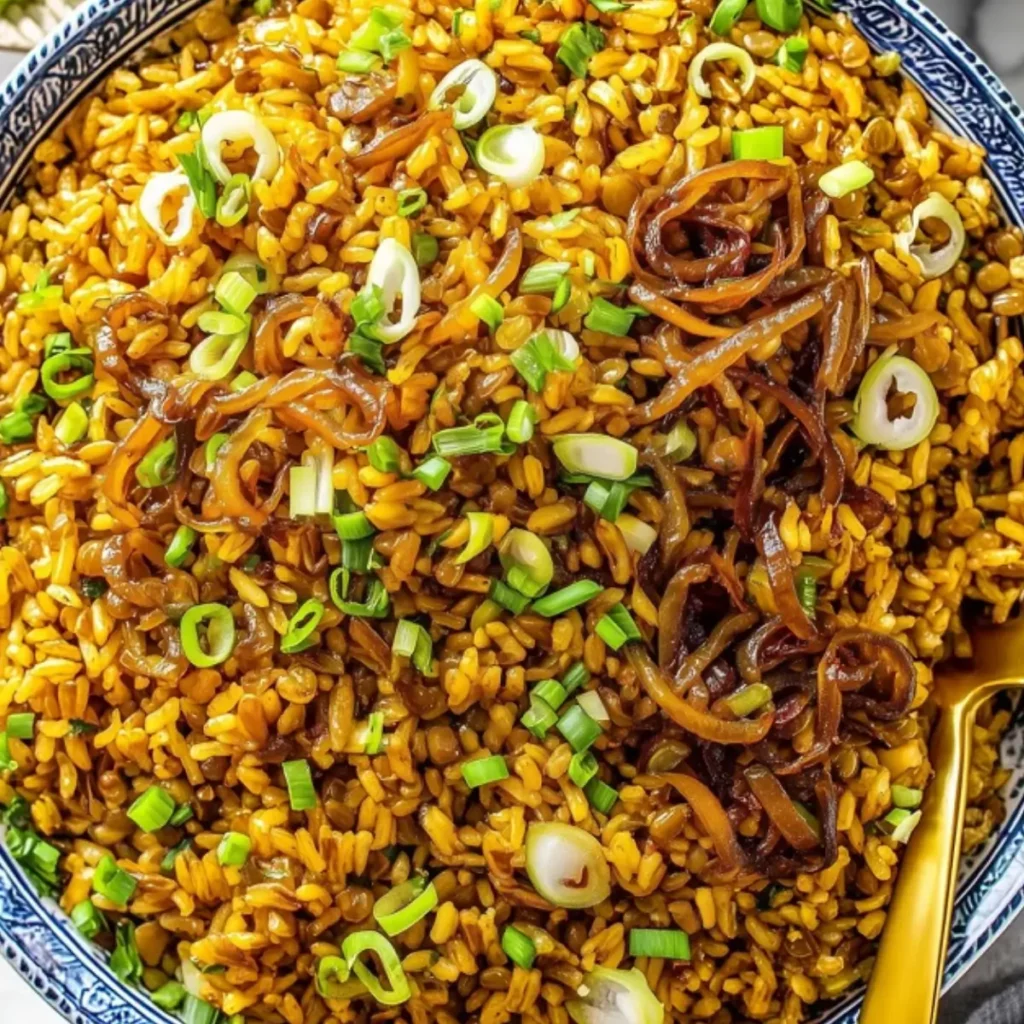
Table of Contents
The Quiet Magic Behind Mujadara
Mujadara is a traditional dish across the Levant—Lebanon, Syria, Palestine, and beyond. It’s often described as “peasant food,” though that label never quite feels fair once you taste it.
The magic of Mujadara is balance.
Soft lentils bring earthiness. Rice adds lightness and texture. Then come the onions—deeply caramelized until they turn sweet and slightly jammy around the edges. Those onions sit on top like a crown, and honestly, the whole dish would feel incomplete without them.
Spices drift quietly in the background. Nothing aggressive. Just warmth.
Cumin gives a subtle smokiness. Cinnamon adds a whisper of sweetness. Coriander brightens things up. And sometimes a touch of turmeric slips in, giving the rice and lentils that beautiful golden tint.
It’s simple food. But it doesn’t taste simple.
Ingredients That Bring Mujadara to Life
Every ingredient in Mujadara pulls its weight. There aren’t many of them, so each one matters.
• Brown or green lentils – the earthy backbone of Mujadara. They cook until tender but still hold their shape, adding heartiness and protein.
• Basmati rice – light, fragrant grains that keep the dish from feeling too dense. The slight fluffiness balances the lentils perfectly.
• Onions – arguably the star of the show. When slowly caramelized, they become sweet, golden, and slightly crispy around the edges.
• Olive oil – used to cook the onions and build the flavor base. It brings richness without overpowering the dish.
• Garlic – just enough to deepen the flavor and give the spices something to cling to.
• Scallions – mild and fresh, they add gentle onion flavor without heaviness.
• Paprika – brings warmth and a subtle smokiness.
• Ground coriander – bright, citrusy, and slightly floral.
• Cumin – earthy and grounding. It makes the lentils feel richer.
• Cinnamon – used sparingly, but it adds a fascinating warmth that makes Mujadara taste layered.
• Turmeric (optional) – not traditional everywhere, but it gives the dish a warm golden hue.
• Red pepper flakes – just a hint of heat to keep things interesting.
• Fresh parsley – adds brightness and color right at the end.
• Cilantro (optional) – herbal and fresh, if you enjoy its flavor.
• Black pepper and salt – simple seasoning that ties everything together.
• Lemon juice – a squeeze at the end lifts the whole dish.
See the recipe card below for the full list of ingredients and measurements.
Building the Flavor: Start With the Onions
If there’s one step in Mujadara you don’t want to rush, it’s the onions.
Slice them thin. Not paper-thin, but close. Toss them into a skillet with olive oil, a pinch of salt, and a little sugar. At first, they’ll look like far too many onions. That’s normal.
Give them heat. Then patience.
They soften. They slump. After a while, they begin turning golden. Add a splash of water and let them simmer gently. This step feels strange at first, but it allows the onions to soften deeply while concentrating their sweetness.
Eventually the water disappears, and the onions transform into soft, golden ribbons. Right at the end, a splash of vinegar wakes everything up. The sweetness becomes brighter. Sharper. Almost jammy.
Set those aside—but try not to eat all of them before the dish is finished.
Cooking the Lentils for Perfect Mujadara
Lentils are forgiving, but Mujadara works best when they’re tender while still holding their shape.
Bring a pot of salted water to a boil. Add the rinsed lentils and let them simmer gently. The cooking time can vary depending on the variety, but the goal is always the same: soft but not mushy.
Think of them like pasta cooked al dente.
When they’re ready, drain them and let them rest for a moment. They’ll firm up slightly as they cool.
That small pause makes a difference later when everything gets mixed together.
Preparing the Rice So It Stays Light
The rice in Mujadara should feel fluffy and separate, never sticky.
Rinse the grains until the water runs mostly clear. This removes excess starch and keeps things light.
Cook the rice in salted boiling water until it’s tender but still has a slight bite. Drain it just like pasta.
This method might surprise people used to the absorption method for rice, but it works beautifully here. The grains stay separate, and when they mix with the lentils later, the texture stays balanced.
And texture matters in Mujadara. Without it, the dish could easily turn heavy.
Where the Spices Wake Everything Up
Once the onions, lentils, and rice are ready, the real transformation happens.
Heat olive oil in a large skillet.
Add chopped scallions first. They soften quickly and release a gentle onion aroma. Then comes the garlic—pressed or finely grated—followed by the spices.
Paprika. Coriander. Cumin. Cinnamon. Turmeric. Red pepper flakes.
For a brief moment, the pan smells almost intoxicating. Warm. Earthy. Slightly sweet.
Stir quickly so the spices bloom in the oil without burning.
Then add the lentils and rice. Half of the caramelized onions go in too. Toss everything together gently so the grains stay fluffy while the spices coat every bite.
A handful of chopped parsley and cilantro brings color and freshness.
Taste it. Adjust the salt. Maybe a little extra black pepper.
The mixture should feel warm, aromatic, and comforting.
The Finishing Touch That Makes Mujadara Special
Remember those caramelized onions you set aside earlier?
Pile them on top.
Seriously—don’t be shy.
Those onions provide contrast: sweet, soft, and slightly crisp around the edges. Against the earthy lentils and fluffy rice, they create a texture that’s honestly addictive.
Scatter fresh herbs over the top. Add sliced scallion greens if you have them.
Then squeeze a little lemon juice over everything.
That small burst of acidity brightens the entire dish.
Serving Mujadara Like It’s Done in the Levant
Mujadara is incredibly versatile when it comes to serving.
Sometimes it’s the centerpiece of the meal, sitting proudly on a large platter. Other times it’s served alongside salads, yogurt sauces, or fresh vegetables.
A few classic companions make it even better:
Fresh salads that add contrast
A crisp salad cuts through the richness beautifully.
Think cucumber and tomato with lemon. Maybe a bright fattoush with crunchy pita chips. Even a simple parsley salad works.
The freshness balances the warm spices perfectly.
Creamy sauces on the side
Mujadara pairs wonderfully with something creamy.
A bowl of Greek-style yogurt or a yogurt-tahini sauce adds coolness and richness at the same time. The contrast between warm lentils and cold yogurt is unexpectedly good.
Lemon wedges for brightness
Never skip the lemon.
A squeeze right before eating sharpens the flavors and keeps the dish from feeling too heavy.
Sometimes the simplest finishing touches make the biggest difference.
Small Variations That Work Beautifully in Mujadara
One of the things I love most about Mujadara is how adaptable it is.
Different kitchens, different spices, slightly different approaches—but the heart of the dish stays the same.
Try different types of rice
While basmati rice is traditional in many versions, other rice varieties can work too.
Long-grain rice keeps things fluffy. Brown rice adds nuttiness and a little chew. Even jasmine rice works surprisingly well if that’s what you have.
Experiment with the spice blend
Some cooks use a Lebanese seven-spice mix called bahārāt instead of individual spices. It gives the dish a slightly deeper, more complex flavor.
Others keep it simple with just cumin and coriander.
Both approaches are delicious.
Add extra herbs
Parsley and cilantro are common, but fresh mint can be wonderful here too. Just a little goes a long way.
It adds brightness that contrasts beautifully with the lentils.
A little extra heat
If you like spice, a bit more red pepper flakes—or even a drizzle of chili oil—can bring another layer of flavor.
Not traditional, maybe. But very good.
Storing and Reheating Mujadara
One of the quiet superpowers of Mujadara is how well it keeps.
In the refrigerator
Stored in an airtight container, Mujadara stays good for several days. The flavors actually deepen overnight, which means leftovers are often even better the next day.
Reheat it gently in a skillet with a small drizzle of olive oil, or warm it in the microwave.
Freezing Mujadara
Yes, it freezes well.
Let the dish cool completely, then transfer it to a freezer-safe container. It can stay frozen for a few months.
Thaw it slowly in the refrigerator before reheating.
Make-ahead components
If you’re planning ahead, the onions, lentils, and rice can all be cooked separately a few days in advance.
When you’re ready to eat, simply warm everything in a skillet with the spices and herbs.
Dinner comes together surprisingly fast that way.
And somehow, even after sitting in the fridge for a day or two, Mujadara still smells incredible the moment it hits the pan.
Conclusion
A bowl of Mujadara has a quiet kind of magic. The lentils are earthy, the rice soft and fragrant, and those caramelized onions… sweet, golden, almost silky. It’s the sort of dish that feels humble at first bite but slowly reveals layers of warmth and comfort. Serve Mujadara warm with a squeeze of lemon, maybe a spoonful of cool yogurt on the side, and suddenly dinner feels both simple and deeply satisfying.
FAQs about Mujadara
What is Mujadara made of?
Mujadara is traditionally made with lentils, rice, and deeply caramelized onions. These simple ingredients are combined with olive oil and warm spices like cumin, coriander, and cinnamon. Fresh herbs and lemon juice are often added at the end for brightness. Despite its simplicity, the flavor is surprisingly rich and layered.
Can Mujadara be made ahead of time?
Yes, Mujadara is excellent for meal prep. The lentils, rice, and caramelized onions can be prepared a few days in advance and stored separately in the refrigerator. When you’re ready to serve, simply warm everything together in a skillet with the spices. Many people find the flavors deepen overnight.
How do you store and reheat Mujadara?
Store leftover Mujadara in an airtight container in the refrigerator for up to five days. To reheat, warm it in a skillet with a small drizzle of olive oil or microwave it until heated through. If the rice feels slightly dry, a splash of water or broth can help restore its texture.
Can Mujadara be frozen?
Yes, Mujadara freezes well. Allow it to cool completely before placing it in a freezer-safe container. It can be frozen for up to three months. Thaw it overnight in the refrigerator and reheat gently on the stove or in the microwave.
More Relevant Recipes
- Moroccan Lentil and Roasted Carrot Salad: This vibrant lentil salad shares the same earthy base ingredient that makes Mujadara so comforting. Tender lentils are paired with sweet roasted carrots and warm spices, creating a hearty plant-based dish with Middle Eastern–inspired flavors. It delivers a similar balance of wholesome legumes, aromatic seasoning, and satisfying texture while offering a slightly lighter, salad-style presentation.
- Mediterranean Bowl with Roasted Chickpeas and Quinoa: This Mediterranean bowl captures many of the same cozy, wholesome elements found in Mujadara. Protein-rich chickpeas and fluffy quinoa replace lentils and rice, but the dish keeps the same comforting grain-and-legume combination. With roasted vegetables, herbs, and bright Mediterranean flavors, it creates a nourishing meal that feels just as hearty and satisfying.
- Roasted Veggie and Chickpea Bowl: Packed with roasted vegetables and hearty chickpeas, this bowl mirrors the wholesome, plant-based comfort of Mujadara. The combination of warm spices, tender legumes, and nourishing grains creates a filling dish that’s both simple and deeply flavorful. Like Mujadara, it relies on humble ingredients that transform into a satisfying meal with rich, savory depth.
Mujadara Recipe

Mujadara is a comforting Middle Eastern dish made with lentils, basmati rice, fragrant spices, and plenty of golden caramelized onions layered on top.
- Prep Time: 15 minutes
- Cook Time: 35 minutes
- Total Time: 50 minutes
- Yield: 4 servings 1x
- Category: Main Course
- Method: Stovetop
- Cuisine: Middle Eastern
Ingredients
- 4 large white or yellow onions
- 1 tablespoon olive oil
- 1 tablespoon sugar
- ¾ teaspoon salt
- 1 cup water
- 1 tablespoon apple cider or balsamic vinegar
- 1 cup dried lentils (green or brown)
- 4 cups water (for cooking lentils)
- 1 teaspoon salt (for cooking lentils)
- ½ cup basmati rice
- 3 cups water (for cooking rice)
- ½ teaspoon salt (for cooking rice)
- 1 tablespoon extra virgin olive oil
- 4 scallions, finely chopped (green tops reserved for garnish)
- 2 cloves garlic, pressed or grated
- 1 teaspoon paprika
- 1 teaspoon ground coriander
- ½ teaspoon ground cumin
- ½ teaspoon ground cinnamon
- ½ teaspoon turmeric powder
- ⅛ teaspoon red pepper flakes
- ½ teaspoon salt
- ⅛ teaspoon black pepper
- 2 tablespoons flat-leaf parsley, chopped
- 2 tablespoons cilantro, chopped (optional)
Instructions
- Slice the onions into thin strips. Heat olive oil in a large skillet, then cook the onions with salt and sugar over medium heat for about 5 minutes, stirring occasionally.
- Pour in the water, reduce the heat slightly, and allow the onions to simmer until the liquid evaporates and they become soft and deeply golden, about 20 minutes. Raise the heat, stir in the vinegar, cook briefly, then set aside.
- Bring a large pot of water to a boil. Add the rinsed lentils with salt and simmer until tender but still intact, about 15 to 30 minutes. Drain and keep aside.
- In another pot, boil salted water and add the rinsed basmati rice. Cook until the grains are tender with a slight bite, about 8 to 10 minutes. Drain well.
- Warm olive oil in a wide skillet. Add the chopped scallions and cook for about 2 minutes until fragrant.
- Stir in the garlic, paprika, coriander, cumin, cinnamon, turmeric, and red pepper flakes. Cook briefly so the spices release their aroma.
- Add the cooked lentils, drained rice, half of the caramelized onions, parsley, cilantro, salt, and black pepper. Toss gently and cook for a few minutes until everything is heated through.
- Transfer the mixture to a serving dish and finish with the remaining caramelized onions and reserved scallion tops before serving.
Notes
- Lentils should be tender but still keep their shape to prevent the dish from becoming mushy.
- The caramelized onions develop most of the dish’s sweetness and depth, so allow them enough time to cook slowly.
- If using canned lentils, rinse and drain them well before adding to the skillet with the spices.
- This dish can be prepared ahead of time and reheated gently with a drizzle of olive oil.
Nutrition
- Serving Size: 1 serving
- Calories: 393 kcal
- Sugar: 9 g
- Sodium: 744 mg
- Fat: 8 g
- Saturated Fat: 1 g
- Unsaturated Fat: 7 g
- Trans Fat: 0 g
- Carbohydrates: 64 g
- Fiber: 19 g
- Protein: 16 g
- Cholesterol: 0 mg
Keywords: Mujadara, lentils and rice, Middle Eastern lentil dish, caramelized onions, rice and lentils recipe