
There’s something about Sweet Glazed Easter Bread that feels almost ceremonial. Not in a stiff, formal way—but in that soft, familiar rhythm of dough rising quietly on the counter while the house smells faintly of sugar and yeast. I always end up checking it too often, like somehow staring at it will make it puff faster. It never does. Still, I check.
This bread has that gentle sweetness that doesn’t overwhelm. It’s tender, slightly rich, and finished with a glossy glaze that cracks just a little when you tear into it. And honestly, that first pull-apart moment? That’s the whole reason I make it every year.
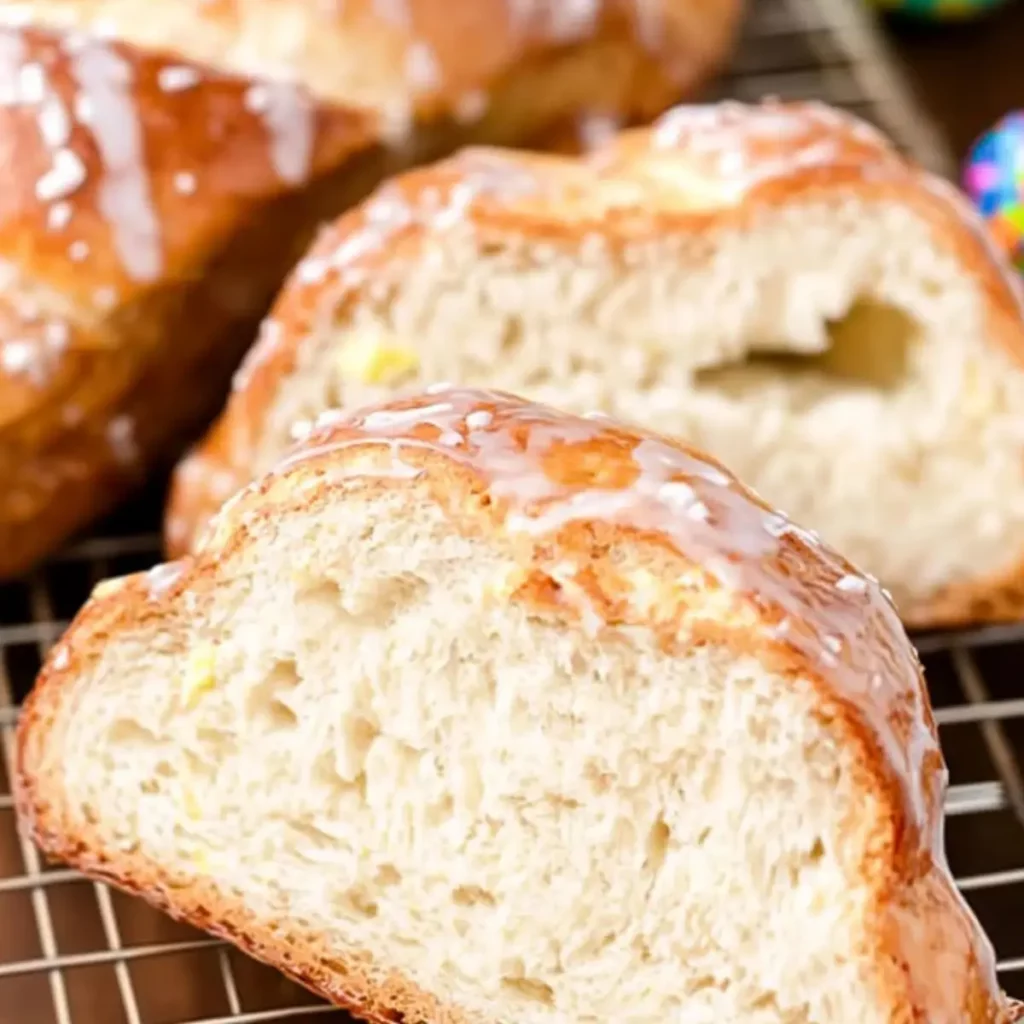
Table of Contents
The charm behind this Sweet Glazed Easter Bread
Sweet Glazed Easter Bread isn’t just about flavor—it’s texture, aroma, and a little nostalgia rolled into one. The crumb is soft but not too airy, almost like a cross between a brioche and a classic sweet roll. It holds together beautifully, yet yields easily when you press into it.
And the glaze. Oh, the glaze. It settles over the warm bread like a thin, sugary veil, soaking in just enough to create those slightly sticky edges that everyone secretly fights over.
There’s also something quietly festive about it. Maybe it’s the subtle sweetness or the golden crust, but it always feels like it belongs on a spring table, surrounded by pastel colors and too many desserts.
Ingredients that quietly make magic happen
The beauty of this Sweet Glazed Easter Bread is how simple the ingredients are—nothing flashy, just a handful of pantry staples working together in that almost alchemical way baking tends to have.
- All-purpose flour – gives the bread its structure while still keeping it soft and tender
- Granulated sugar – adds a gentle sweetness that doesn’t overpower
- Active dry yeast – the quiet engine behind that soft, pillowy rise
- Milk – brings richness and helps create a softer crumb
- Butter – adds depth and that slightly indulgent flavor you can’t quite name but definitely notice
- Eggs – help bind everything together while adding richness and color
- Salt – just enough to balance the sweetness and keep things from tasting flat
- Vanilla extract – a subtle warmth that lingers in the background
- Powdered sugar – the base for that smooth, glossy glaze
- A splash of liquid (like milk or water) – to bring the glaze to that perfect drizzle consistency
See the recipe card below for the full list of ingredients and measurements.
Bringing Sweet Glazed Easter Bread to life in your kitchen
The dough stage — patience pays off
- Start by waking up the yeast. Warm liquid—never hot, that’s a fast way to ruin everything—gets mixed with a bit of sugar and yeast. Let it sit until it looks slightly foamy. That’s when you know it’s alive and ready.
- In a larger bowl, combine your flour with sugar and salt. Then add in the yeast mixture, along with eggs, softened butter, and a touch of vanilla.
- Mix until it starts to come together. It’ll look messy at first—don’t panic. That’s normal. Keep going until it forms a soft dough.
- Knead it. You can do this by hand (a bit therapeutic, honestly) or with a mixer. The dough should become smooth and slightly elastic, pulling away from your hands but still soft.
- Place it in a lightly greased bowl, cover it, and let it rise until doubled in size. This is where patience really gets tested. It takes time. But rushing it? Not worth it.
Shaping and second rise — where it starts to look like bread
- Once risen, gently punch down the dough. Not aggressively—just enough to release the air.
- Shape it into a loaf or divide it into smaller portions if you prefer individual breads. Sometimes I braid it, sometimes I don’t. Depends on my mood, honestly.
- Place the shaped dough onto a prepared baking surface and let it rise again. This second rise is what gives the bread that soft, airy texture.
Baking and glazing — the transformation moment
- Bake in a preheated oven until the top turns a beautiful golden brown. The smell at this point? Unreal. It’s warm, slightly sweet, and unmistakably comforting.
- Let the bread cool slightly—but not completely—before adding the glaze.
- Mix powdered sugar with a bit of liquid until smooth, then drizzle it over the warm bread. It should run just enough to create those delicate lines across the surface.
Getting that soft, bakery-style texture just right
A few small tricks that make a big difference
The difference between “good” and “why is this so soft?” often comes down to a handful of small details.
- Don’t overheat the liquid when activating yeast. Warm is good. Hot is not your friend.
- Knead until the dough feels smooth and elastic. If it’s still sticky and shaggy, give it a bit more time.
- Let it rise fully. Under-proofed dough leads to dense bread, and that’s just disappointing.
- Avoid overbaking. Once it’s golden and sounds slightly hollow when tapped, it’s ready.
And here’s a slightly odd habit of mine—I always tap the top twice, just to be sure. I don’t know why. It just feels right.
Sweet Glazed Easter Bread variations worth trying
Small twists that change everything
Once you’ve made this Sweet Glazed Easter Bread once, it’s hard not to start experimenting.
- Add a hint of citrus zest—lemon or orange—to brighten the flavor
- Sprinkle a few raisins or dried cranberries into the dough for little bursts of sweetness
- Swap the vanilla for almond extract if you want something a bit more aromatic
- Top the glaze with colorful sprinkles for a more festive look
Sometimes I keep it plain because I love its simplicity. Other times, I go all in. There’s no strict rule here, which is part of the charm.
Serving ideas and storing leftovers (if there are any)
How it fits into your Easter table
This Sweet Glazed Easter Bread works beautifully as a breakfast centerpiece or a side to a larger brunch spread. Slice it thick and serve it with butter, or just pull it apart and eat it as-is while it’s still slightly warm.
It pairs especially well with coffee. Or tea. Or honestly, just standing in the kitchen in your pajamas.
Keeping it fresh
- Store it in an airtight container at room temperature for a couple of days
- If it starts to firm up, a quick warm-up brings it back to life surprisingly well
- You can freeze it too—just wrap it tightly and thaw when needed
Though, realistically, it rarely lasts long enough to need freezing. Someone always sneaks “just one more piece,” and suddenly it’s gone.
A soft, sweet ending worth lingering over
By the time the glaze settles and that first slice is pulled away, this Sweet Glazed Easter Bread feels less like something you baked and more like something you experienced. It’s warm, lightly sweet, and just rich enough to make you pause between bites. I usually end up tearing off “just one more piece,” standing at the counter, crumbs everywhere. Serve it slightly warm, maybe with a swipe of butter melting into the folds, and it somehow tastes even better the second time around.
FAQs about Sweet Glazed Easter Bread
Can I make Sweet Glazed Easter Bread ahead of time?
Yes, you can prepare the dough the night before and let it rise slowly in the refrigerator. This actually deepens the flavor a bit. Just bring it back to room temperature before shaping and baking. Freshly baked is still best, but this helps with timing.
How do I store Sweet Glazed Easter Bread to keep it soft?
Keep it in an airtight container at room temperature for up to a couple of days. If your kitchen runs dry, you might notice it firm up slightly. A quick warm-up in the microwave or oven usually brings back that soft texture.
Can I freeze this glazed Easter bread?
Absolutely. Wrap the bread tightly in plastic wrap and then a layer of foil before freezing. It keeps well for up to a couple of months. When ready to enjoy, thaw it at room temperature and warm it slightly before serving.
What can I use instead of vanilla in Sweet Glazed Easter Bread?
If you’re out of vanilla, almond extract works beautifully and adds a slightly nutty aroma. You could also use a bit of citrus zest for a brighter flavor. Each option gives the bread a slightly different personality, but all are delicious
More Relevant Recipes
- Vegan Hot Cross Buns: These soft, lightly spiced buns carry that same sweet, yeasty charm as Sweet Glazed Easter Bread, with a tender crumb and subtle warmth from spices. Studded with dried fruit and finished with a simple glaze, they bring a similarly festive, bakery-style feel that fits perfectly into spring celebrations.
- Vegan Brioche Bread: Rich, fluffy, and delicately sweet, this vegan brioche mirrors the soft texture and buttery flavor notes found in Sweet Glazed Easter Bread. It’s perfect for those who love that pillowy interior and slightly golden crust, making it a versatile option for breakfast or dessert.
- Vegan Cinnamon Swirl Bread: This sweet, aromatic bread offers a cozy twist with its cinnamon-sugar ribbons running through a soft, tender loaf. Much like Sweet Glazed Easter Bread, it leans into comforting sweetness and a soft bite, but adds a warm spice element that makes each slice feel extra indulgent.
Sweet Glazed Easter Bread
A soft and lightly sweet Sweet Glazed Easter Bread with a tender crumb and delicate sugar glaze, perfect for spring gatherings and festive baking.
- Prep Time: 1 hour 30 minutes
- Cook Time: 30 minutes
- Total Time: 2 hours
- Yield: 1 loaf 1x
- Category: Bread
- Method: Baking
- Cuisine: American
Ingredients
- 3 1/2 cups all-purpose flour
- 1/4 cup granulated sugar
- 1 packet active dry yeast (2 1/4 teaspoons)
- 3/4 cup warm milk
- 1/4 cup unsalted butter, softened
- 2 large eggs
- 1/2 teaspoon salt
- 1 teaspoon vanilla extract
- 1 cup powdered sugar
- 2–3 tablespoons milk (for glaze)
Instructions
- In a small bowl, combine warm milk, yeast, and a pinch of sugar. Let it sit until it becomes foamy, about 5–10 minutes.
- In a large mixing bowl, whisk together flour, remaining sugar, and salt.
- Add the yeast mixture, eggs, butter, and vanilla extract to the dry ingredients. Mix until a soft dough forms.
- Knead the dough on a floured surface for about 8–10 minutes until smooth and elastic.
- Transfer the dough to a greased bowl, cover, and allow it to rise in a warm place until doubled in size, about 1 hour.
- Punch down the dough and shape it into a loaf or braid. Place on a lined baking sheet.
- Cover and let it rise again for 30–40 minutes until puffy.
- Bake in a preheated oven at 350°F (175°C) for 25–30 minutes or until golden brown.
- Allow the bread to cool slightly before preparing the glaze.
- Whisk powdered sugar with milk until smooth, then drizzle over the warm bread before serving.
Notes
- Ensure the milk is warm, not hot, to properly activate the yeast.
- If the dough feels too sticky, add a small amount of flour gradually while kneading.
- Let the bread cool slightly before glazing so the icing sets nicely without melting away.
- This bread can be shaped into braids or rolls for a decorative presentation.
Nutrition
- Serving Size: 1 slice
- Calories: 210
- Sugar: 9g
- Sodium: 120mg
- Fat: 6g
- Saturated Fat: 3g
- Unsaturated Fat: 2g
- Trans Fat: 0g
- Carbohydrates: 34g
- Fiber: 1g
- Protein: 5g
- Cholesterol: 35mg
Keywords: Sweet Glazed Easter Bread, Easter bread recipe, glazed sweet bread, homemade Easter loaf, soft yeast bread