There’s something about a good Texas Sheet Cake that feels a little nostalgic and a little indulgent at the same time. The kind of dessert that doesn’t try too hard—but still manages to steal the spotlight. I remember the first time I made it, standing in a slightly too-warm kitchen, wondering if pouring warm frosting onto a warm cake was… a mistake? It wasn’t. Not even close.
That glossy chocolate layer seeped just slightly into the surface, creating this soft, almost fudge-like top that still haunts my dessert cravings.
And honestly? Once you make this Texas Sheet Cake, you’ll understand why it’s one of those recipes people guard like a family secret.

Table of Contents
What Makes This Texas Sheet Cake So Irresistibly Soft
This isn’t your average chocolate cake. It’s thinner, yes—but that’s part of the charm. Every bite is balanced. No towering layers. No overwhelming frosting. Just… harmony.
The magic really starts with a warm cocoa mixture—butter, water, and cocoa powder heated together until everything melts into this silky, chocolatey base. It smells rich. Deep. Almost like hot cocoa, but more grown-up.
Then there’s the buttermilk. Slightly tangy, slightly creamy. It sneaks in and transforms the texture into something incredibly tender. Not dense, not airy—somewhere right in between. The kind of crumb that feels like it barely holds together, yet somehow does.
And the frosting? It’s not spread cold. No, that would be too easy. It’s poured while still warm, creating that signature Texas Sheet Cake finish that’s smooth, shiny, and just a little messy in the best way.
Ingredients That Bring This Texas Sheet Cake to Life
Here’s where things get simple—but don’t mistake simple for boring.
• Butter – the backbone of richness; it melts into both the cake and frosting, giving everything that soft, luxurious feel
• Cocoa powder – unsweetened and bold, it builds that deep chocolate flavor without making things overly sweet
• Water – helps bloom the cocoa and create that silky base mixture
• All-purpose flour – keeps the structure light but sturdy enough to hold the frosting
• Granulated sugar – brings sweetness, but also contributes to that tender texture
• Baking soda – gives just enough lift so the cake doesn’t feel heavy
• Salt – a quiet hero; sharpens the chocolate flavor in a subtle way
• Eggs – help bind everything together while adding richness
• Vanilla extract – rounds out the chocolate with a warm, aromatic note
• Buttermilk – adds moisture and a slight tang that keeps the cake from feeling flat
• Milk – used in the frosting to loosen it into that pourable consistency
• Powdered sugar – creates that smooth, melt-in-your-mouth frosting texture
See the recipe card below for the full list of ingredients and measurements.
The Process: Where Warm Batter Meets Warm Frosting
Building the Chocolate Base
Start by heating butter, water, and cocoa powder together. Don’t rush this part. Let it come to a gentle boil while stirring—it should look glossy and smell like something you want to dive into headfirst.
Once that’s ready, it gets poured into a bowl of dry ingredients. The contrast is a little dramatic—hot meets dry—but it comes together quickly into a smooth batter.
Add in your eggs (already beaten), a splash of vanilla, and that all-important buttermilk. Stir just until everything is combined. Not perfectly smooth, not overworked—just enough. Overmixing here? It changes the texture, and not in a good way.
Pour the batter into a prepared sheet pan, spreading it out into the corners. It’ll look thin. That’s exactly right.
Baking It Just Right
Slide it into the oven and keep a quiet eye on it. This cake doesn’t take long—somewhere between 15 and 20 minutes—but those minutes matter.
You’ll know it’s ready when the center springs back lightly and a toothpick comes out clean. Not dry, just clean. There’s a difference.
And then—this is important—let it cool for only a few minutes. Not fully. Not even close.
That Signature Texas Sheet Cake Frosting Moment
While the cake bakes, start the frosting. Timing matters more than precision here, which feels a little backwards but also freeing.
Melt butter in a saucepan, stir in cocoa powder until smooth, then pull it off the heat. Add milk, vanilla, and powdered sugar, stirring until it becomes glossy and pourable. If it looks too thick, don’t panic—it loosens as you stir.
Now comes the moment. The cake is warm. The frosting is warm. You pour it straight over the surface.
It spreads quickly, almost urgently, so grab a spatula and guide it to the edges. Some of it sinks in slightly. That’s not a flaw—it’s the whole point.
Give it a few minutes to set. Or don’t. I’ve definitely cut into it too early before, and honestly, no regrets.
Small Details That Make a Big Difference
Timing the Frosting Just Right
If the frosting sits too long, it thickens. If it thickens too much, it won’t spread properly. So aim to finish it right as the cake comes out of the oven.
There’s a rhythm to it. You’ll feel it after the first try.
Don’t Skip Sifting (If You Can Help It)
Powdered sugar has a tendency to clump, and while a few tiny lumps won’t ruin anything, a smooth frosting really does hit differently. Silky. Even. Almost glossy enough to reflect light.
Keep an Eye on the Oven
Not all ovens behave the same way, which is a polite way of saying some are wildly unpredictable. Start checking early. A minute or two can be the difference between tender and overdone.
Serving, Storing, and Sneaking Extra Slices
This Texas Sheet Cake slices beautifully once the frosting sets, but there’s something special about catching it in that in-between stage—when the top is just barely firm and still a little melty underneath.
Serve it straight from the pan. No need to overthink it.
If you’ve got leftovers, just cover the pan and keep it at room temperature for a couple of days, or refrigerate it if your kitchen runs warm. It actually gets even fudgier the next day, which feels like a quiet bonus.
Freezing works too. Let everything cool completely first, then wrap it well. When you bring it back, a quick warm-up brings that soft texture right back to life.
And if you’re anything like me, you’ll keep going back for “just one more sliver” until suddenly… there’s not much left to store anyway.
Conclusion
There’s something quietly satisfying about slicing into a Texas Sheet Cake while it’s still just a little warm, the frosting soft and barely set, almost melting into each bite. The texture is tender, the chocolate deep but not overwhelming, and that thin layer makes it dangerously easy to go back for seconds. I usually grab a square straight from the pan, no plate, no fuss. It’s the kind of dessert that doesn’t need dressing up—just good company and maybe a cold glass of milk on the side.
FAQs about Texas Sheet Cake
Can you freeze Texas Sheet Cake?
Yes, Texas Sheet Cake freezes surprisingly well. Let it cool completely so the frosting sets, then wrap it tightly in layers to prevent freezer burn. When you’re ready to enjoy it again, thaw it overnight in the fridge and warm it slightly for that fresh-from-the-oven feel.
How do you store Texas Sheet Cake to keep it moist?
Keep the cake covered at room temperature for a couple of days if your kitchen isn’t too warm. For longer storage, place it in the fridge, where it will stay fresh for several days. The frosting helps lock in moisture, so it rarely dries out quickly.
Can I make Texas Sheet Cake without buttermilk?
You can substitute buttermilk if needed. A quick mix of milk with a splash of lemon juice or vinegar works well in a pinch. The flavor shifts slightly, but you’ll still get a soft, tender crumb that feels close to the original.
Why is my Texas Sheet Cake dense instead of soft?
A dense texture usually comes from overmixing the batter once the wet and dry ingredients are combined. Stir just until everything comes together. Also, keep an eye on baking time—overbaking can take away that delicate, melt-in-your-mouth softness.
More Relevant Recipes
- Vegan Chocolate Cake: This rich and tender chocolate cake delivers the same deep cocoa flavor and soft, melt-in-your-mouth texture that makes Texas Sheet Cake so irresistible. It leans slightly fluffier, but still brings that nostalgic chocolate comfort, making it a perfect alternative when you want a similar indulgent dessert with a plant-based twist.
- Vegan Chocolate Frosting: Smooth, glossy, and decadently chocolatey, this frosting mirrors the signature poured topping of a Texas Sheet Cake. It spreads easily and sets with a luscious finish, making it ideal for recreating that same rich, slightly fudgy layer on cakes, brownies, or even cupcakes.
- Vegan Brownies: Dense, moist, and intensely chocolate-forward, these brownies echo the fudgy bite and richness found in Texas Sheet Cake. While they’re thicker and more compact, they share that same comforting cocoa depth and satisfying texture that makes every bite feel like a treat worth lingering over.
Texas Sheet Cake
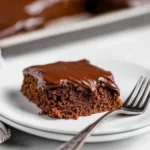
This Texas Sheet Cake is a thin, ultra-moist chocolate cake topped with a warm, pourable frosting that seeps into every bite.
- Cook Time: 15-20 minutes
- Total Time: 0 minute
- Category: Dessert
- Method: Baking
- Cuisine: American
Ingredients
- 1 cup butter
- 1 cup water
- 5 tablespoons unsweetened cocoa powder
- 2 cups all-purpose flour
- 2 cups granulated sugar
- 1 teaspoon baking soda
- 1/2 teaspoon salt
- 2 eggs, beaten
- 1 teaspoon vanilla extract
- 1/2 cup buttermilk
- For the frosting: 12 tablespoons butter
- 4 tablespoons unsweetened cocoa powder
- 6 tablespoons milk
- 1 lb (16 oz) powdered sugar, sifted
- 1 teaspoon vanilla extract
Instructions
- Preheat your oven to 350°F and lightly grease an 18 x 13-inch sheet pan.
- In a saucepan over medium heat, combine the butter, water, and cocoa powder. Stir continuously until the mixture reaches a gentle boil, then remove from heat.
- In a large bowl, whisk together the flour, sugar, baking soda, and salt until evenly blended.
- Pour the warm chocolate mixture into the dry ingredients and stir until fully incorporated.
- Add the beaten eggs, vanilla extract, and buttermilk. Mix just until the batter comes together smoothly.
- Transfer the batter into the prepared pan and spread it evenly.
- Bake for 15–20 minutes, checking for doneness with a toothpick inserted in the center.
- While the cake is baking, begin the frosting by melting butter in a saucepan over medium heat.
- Stir in the cocoa powder until smooth, then remove from heat.
- Add the milk, vanilla extract, and sifted powdered sugar. Stir until the frosting is glossy and lump-free.
- Once the cake is out of the oven and has cooled slightly for about 3 minutes, pour the warm frosting over the surface and quickly spread it evenly.
- Allow the frosting to set before slicing and serving.
Notes
- Use an 18 x 13-inch pan to achieve the classic thin texture associated with this cake.
- Keep an eye on baking time, as ovens can vary and the cake bakes quickly.
- Start preparing the frosting when the cake is more than halfway done so everything is ready at the right moment.
- Sifting the powdered sugar helps create a smoother frosting consistency.
- Pour the frosting while both it and the cake are still warm for the best texture.
- The frosting firms up as it cools, so spread it promptly after pouring.
Keywords: Texas Sheet Cake, chocolate sheet cake, easy chocolate cake, buttermilk cake, classic chocolate dessert