There’s something about a big bowl of vegetable couscous that feels effortlessly comforting. The first time I made it, my fridge was holding a random mix of vegetables that didn’t quite belong together—half an eggplant, one lonely zucchini, and a couple of tomatoes that were just starting to wrinkle. I tossed everything into a skillet with olive oil, spices, and fluffy couscous, hoping for the best.
What came out of the pan was surprisingly vibrant: tender vegetables coated in warm cumin and oregano, tiny grains of couscous soaking up every bit of flavor, and a fresh pop of parsley and lemon at the end. Since then, vegetable couscous has become one of those dependable recipes I reach for when I want something quick, satisfying, and full of Mediterranean flavor.
It’s also the kind of dish that adapts to whatever you’ve got on hand. The base stays the same—light, fluffy couscous paired with sautéed vegetables—but the details shift depending on the season or what’s lingering in your produce drawer.
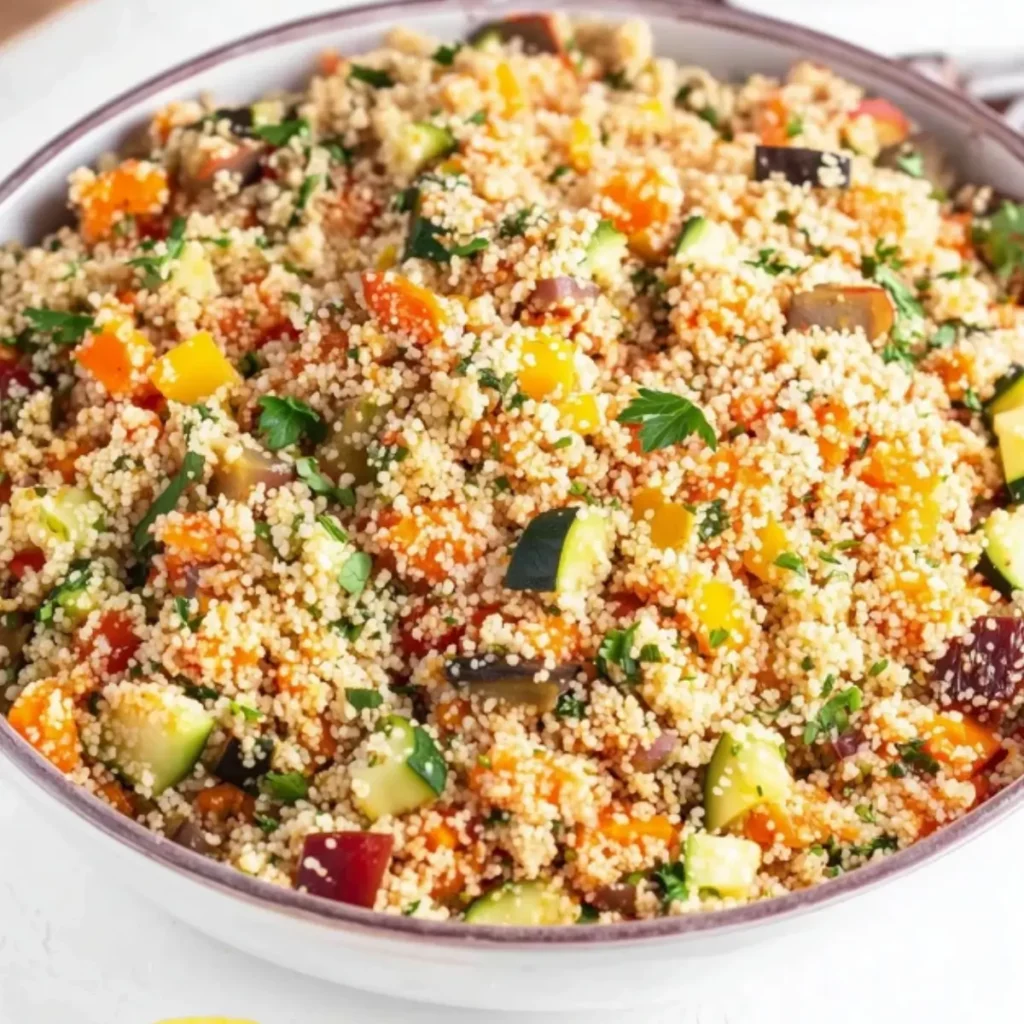
Table of Contents
The Mediterranean Charm of Vegetable Couscous
Vegetable couscous has roots in Mediterranean and North African kitchens, where couscous is more than just a side dish—it’s a staple. In places like Morocco, couscous often arrives piled high with vegetables, herbs, and fragrant spices.
This version leans toward the lighter Mediterranean style. Instead of long-simmered stews, the vegetables are quickly sautéed until tender but still vibrant. That quick cooking keeps their color bright and their flavor fresh.
What I love most about vegetable couscous is how balanced it feels. The couscous itself is soft and fluffy, almost cloud-like, while the vegetables add texture and sweetness. A little cumin warms everything up, oregano brings a subtle herbal note, and fresh parsley brightens the whole dish.
And then there’s the smell. When garlic and cumin hit warm olive oil, the kitchen instantly fills with that cozy, savory aroma that makes people wander in asking what’s cooking.
Ingredients That Give Vegetable Couscous Its Flavor
The beauty of vegetable couscous is that the ingredients are simple but work together beautifully. Each one contributes a layer of flavor, texture, or brightness.
• Couscous – The tiny pasta-like grains that form the base of the dish. Once hydrated with hot liquid, they become light, fluffy, and perfect for absorbing the juices from sautéed vegetables.
• Olive oil – Used to sauté the vegetables and build flavor. A good extra virgin olive oil adds richness and that unmistakable Mediterranean character.
• Onion – The aromatic foundation of the dish. As it softens in the pan, it develops sweetness and depth.
• Garlic – Adds a fragrant, savory kick. Just a little transforms the entire skillet.
• Carrot – Brings natural sweetness and a slightly firm texture that contrasts nicely with the couscous.
• Eggplant – Soft, tender, and almost creamy once cooked. It absorbs the olive oil and spices beautifully.
• Zucchini – Light and slightly crisp, adding freshness and color.
• Bell pepper – Offers a subtle sweetness and bright color that makes the dish visually appealing.
• Tomatoes – Their juices help create a light sauce that coats the couscous.
• Peas – Small bursts of sweetness that brighten every bite.
• Cumin – Adds warm, earthy depth that gives vegetable couscous its Mediterranean personality.
• Oregano – A classic herb that pairs beautifully with the vegetables.
• Parsley – Fresh and vibrant, stirred in at the end for color and brightness.
• Lemon juice – A final squeeze lifts the whole dish and balances the savory flavors.
See the recipe card below for the full list of ingredients and measurements.
Cooking Vegetable Couscous Step by Step
This dish comes together quickly, which is part of its charm. The vegetables cook in one skillet while the couscous softens in a bowl nearby.
1. Start with the aromatic base
Heat olive oil in a large skillet over medium heat. Add chopped onion and carrot first. These two take slightly longer to soften, so letting them cook together builds the flavor foundation.
After a few minutes, stir in the garlic and cumin. The moment the cumin hits the hot oil, the aroma changes completely—warm, earthy, and deeply inviting.
2. Add the heartier vegetables
Dice the eggplant and add it to the pan. It will start absorbing the oil almost immediately, which is exactly what you want.
If the pan looks a little dry, add a splash of water and continue cooking. The eggplant softens beautifully while still holding its shape.
3. Bring in color and sweetness
Next come the zucchini, bell pepper, and tomatoes. As they cook, the tomatoes begin releasing their juices, creating a light coating for the vegetables.
Add the peas along with oregano, salt, and black pepper. Stir occasionally while everything softens and mingles together in the skillet.
The vegetables should be tender but still colorful—not mushy.
4. Prepare the couscous
While the vegetables cook, place the couscous in a bowl with a little salt. Pour boiling water or hot vegetable broth over the grains and give it a quick stir.
Cover the bowl and let it sit for a few minutes.
When you lift the cover, the couscous will have absorbed the liquid completely. Use a fork to fluff it gently, breaking up any clumps until the grains are light and separate.
5. Combine everything
Add the sautéed vegetables to the couscous along with chopped parsley and a squeeze of lemon juice.
Toss everything together until the vegetables are evenly distributed and the couscous turns lightly golden from the spices.
Taste and adjust the seasoning if needed.
Small Tricks That Make Vegetable Couscous Even Better
Fluff the couscous properly
It sounds simple, but fluffing the couscous with a fork really makes a difference. The first time I made vegetable couscous, I skipped this step and ended up with clumps instead of light grains.
Scraping the couscous gently with the fork separates the grains and gives it that classic fluffy texture.
Cut the vegetables evenly
Small, evenly sized pieces cook more quickly and mix better with the couscous. Large chunks can overwhelm the delicate grains.
Aim for bite-sized pieces so every forkful has a little of everything.
Let the vegetables caramelize slightly
Don’t rush the sautéing process. Allow the vegetables to cook until they start developing a little color. That mild caramelization adds depth and sweetness to the dish.
Delicious Ways to Serve Vegetable Couscous
Vegetable couscous is incredibly versatile, which is why it’s such a staple in my weekly cooking rotation.
Serve it warm straight from the skillet for a comforting dinner, or let it cool slightly for a light lunch. It works beautifully both ways.
A few favorite serving ideas:
Add a creamy topping
A spoonful of yogurt, tzatziki, or a yogurt-tahini sauce adds cool creaminess that contrasts with the warm spices.
Even a drizzle of tahini alone can transform the dish.
Sprinkle with nuts
Toasted pine nuts, pistachios, or shaved almonds bring a subtle crunch that pairs wonderfully with the soft couscous.
Turn it into a complete meal
Vegetable couscous is satisfying on its own, but it also works well as a base for extra protein. Chickpeas, lentils, or crumbled feta blend beautifully with the vegetables.
Storing and Enjoying Vegetable Couscous Later
One of the reasons vegetable couscous is perfect for meal prep is how well it keeps.
After a night in the refrigerator, the couscous absorbs even more flavor from the vegetables and herbs. Sometimes I think it actually tastes better the next day.
Store leftovers in an airtight container in the refrigerator, where they’ll stay fresh for several days.
When it’s time to eat, you have options:
- Enjoy it cold as a couscous salad.
- Let it come to room temperature for a light lunch.
- Warm it briefly in the microwave if you prefer it hot.
One thing that doesn’t work particularly well is freezing. The couscous tends to lose its fluffy texture once thawed.
But honestly, vegetable couscous rarely lasts long enough in my kitchen to even consider freezing it. Someone always goes back for another bowl.
Conclusion
A generous bowl of vegetable couscous always feels like a little celebration of simple ingredients. The fluffy grains soak up the warm spices, while the sautéed vegetables bring sweetness, color, and just enough texture to keep every bite interesting. A squeeze of lemon and a scatter of fresh parsley brighten the whole dish in the most satisfying way. Whether you serve this vegetable couscous warm for dinner or chilled the next day for lunch, it’s the kind of meal that quietly disappears from the bowl faster than expected.
FAQs about Vegetable Couscous
Can I make vegetable couscous ahead of time?
Yes, vegetable couscous is excellent for meal prep. The flavors actually deepen as the couscous absorbs the juices from the vegetables while resting in the refrigerator. Store it in an airtight container and enjoy it over the next few days. It can be eaten cold, at room temperature, or gently reheated.
What vegetables work best in vegetable couscous?
The beauty of vegetable couscous is its flexibility. Classic choices include zucchini, bell peppers, eggplant, carrots, tomatoes, and peas. You can also swap in seasonal vegetables like squash, pumpkin, or corn. Just keep the pieces small so they cook evenly and blend nicely with the couscous.
Can vegetable couscous be frozen?
Freezing is not recommended for vegetable couscous. Couscous tends to lose its light texture after thawing and can become slightly mushy. It’s better stored in the refrigerator where it stays fresh for several days. Since it reheats quickly, it’s perfect for easy lunches or dinners.
How do you reheat vegetable couscous without drying it out?
To reheat vegetable couscous, place it in the microwave for a short time until just warm. If it seems a little dry, stir in a small splash of water or vegetable broth before heating. You can also let it sit at room temperature for about 15 minutes and enjoy it slightly chilled, which works especially well for couscous salads.
More Relevant Recipes
- Roasted Veggie and Chickpea Bowl: This wholesome bowl combines roasted vegetables with hearty chickpeas for a satisfying plant-based meal that echoes the vibrant flavors of Vegetable Couscous. Like the couscous dish, it celebrates caramelized vegetables, warm seasonings, and simple ingredients that come together into a colorful Mediterranean-style bowl perfect for lunch or dinner.
- Mediterranean Bowl with Roasted Chickpeas and Quinoa: Packed with roasted chickpeas, fluffy quinoa, and fresh vegetables, this Mediterranean-inspired bowl offers a similar balance of grains, herbs, and savory roasted flavors found in Vegetable Couscous. It’s a nourishing dish with bright textures and bold seasonings, ideal for anyone who enjoys hearty vegetable-forward meals.
- Chickpea Feta Salad: This refreshing salad blends tender chickpeas with crisp vegetables and tangy feta for a bright Mediterranean flavor profile that pairs beautifully with dishes like Vegetable Couscous. With fresh herbs and vibrant ingredients, it delivers the same light yet satisfying feel, making it a perfect companion or alternative for a quick, wholesome meal.
Vegetable Couscous

This Vegetable Couscous combines fluffy couscous with sautéed seasonal vegetables, herbs, and warm spices for a vibrant Mediterranean-inspired meal.
- Prep Time: 10 minutes
- Cook Time: 20 minutes
- Total Time: 30 minutes
- Yield: 4 servings 1x
- Category: Main Dish
- Method: Stovetop
- Cuisine: Mediterranean
Ingredients
- 1 cup couscous
- 1 cup boiling water or vegetable stock
- ½ teaspoon salt
- ⅛ teaspoon turmeric (optional)
- 2 tablespoons extra virgin olive oil
- 1 medium onion, finely chopped
- 1 large carrot, cut into small pieces
- 2 cloves garlic, grated or crushed
- 1 teaspoon cumin
- ½ medium eggplant, diced
- 1 zucchini, chopped
- 2 ripe tomatoes, chopped
- ½ bell pepper, chopped
- ¾ cup frozen peas
- 1 teaspoon oregano
- 1 teaspoon salt, or more to taste
- ⅛ teaspoon black pepper
- 4 tablespoons parsley, chopped
- ½ lemon, squeezed
Instructions
- Warm the extra virgin olive oil in a large skillet over medium heat. Add the chopped onion and carrot, cooking them for about 4 minutes until they begin to soften.
- Stir in the crushed garlic and cumin, letting them cook briefly until aromatic.
- Add the diced eggplant to the pan. Pour in about 3 tablespoons of water and cook for around 5 minutes, stirring from time to time so the vegetables soften evenly.
- Mix in the chopped zucchini, tomatoes, and bell pepper. Add the frozen peas, oregano, salt, and black pepper. Continue cooking for about 10 minutes, stirring occasionally until the vegetables are tender.
- Meanwhile, place the couscous in a mixing bowl along with ½ teaspoon salt and the optional turmeric. Pour in the boiling water or hot vegetable stock and stir once.
- Cover the bowl with a plate and allow the couscous to sit for about 5 minutes so it absorbs the liquid.
- Use a fork to gently separate the grains until the couscous becomes light and fluffy with no clumps remaining.
- Add the cooked vegetables to the bowl of couscous. Sprinkle in the chopped parsley and squeeze the lemon juice over the mixture.
- Toss everything together until evenly combined. Taste and adjust seasoning if necessary before serving.
Notes
- Regular couscous cooks very quickly; avoid using pearl couscous unless prepared according to its package directions.
- If the vegetables start sticking during cooking, add a small splash of water to keep them from burning.
- Fresh herbs such as basil, mint, or dill can replace parsley for a slightly different flavor profile.
- This dish can be served warm, at room temperature, or chilled depending on preference.
- Leftovers keep well in an airtight container in the refrigerator for 3 to 4 days.
- Freezing is not recommended because the couscous texture may become soft after thawing.
Nutrition
- Serving Size: 1 portion
- Calories: 329 kcal
- Sugar: 7 g
- Fat: 8 g
- Saturated Fat: 1 g
- Trans Fat: 0 g
- Carbohydrates: 55 g
- Fiber: 8 g
- Protein: 10 g
- Cholesterol: 0 mg
Keywords: Vegetable Couscous, couscous with vegetables, Mediterranean couscous, vegetable couscous recipe