There’s something quietly magical about making Zeppole di San Giuseppe at home. Maybe it’s the way the dough transforms—first a sticky, slightly awkward paste, then suddenly silky and pipeable, like it figured itself out without telling you. Or maybe it’s that first bite: crisp shell giving way to soft, airy insides, all tangled up with velvety pastry cream and that glossy cherry perched on top like it knows it’s important.
I still remember the first time I made these. I was convinced I’d mess them up. Choux pastry has that reputation—temperamental, dramatic. But honestly? It’s surprisingly forgiving. A little patience, a bit of stirring, and you’re rewarded with something that tastes like it came straight out of a tiny Italian pasticceria.
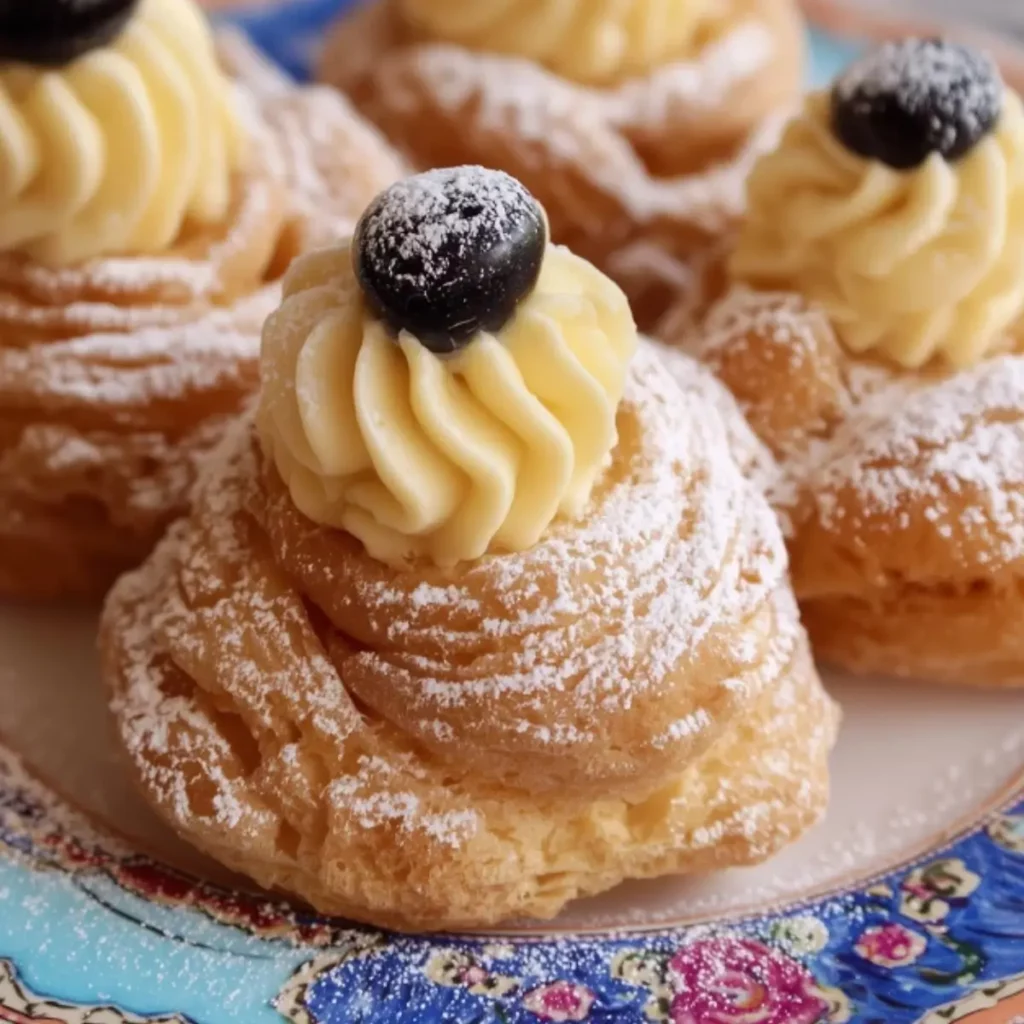
Table of Contents
A Sweet Tradition Baked Into Every Bite
Zeppole di San Giuseppe aren’t just pastries—they’re a celebration. Traditionally made for St. Joseph’s Day, they carry that old-world rhythm of baking for a specific moment, not just because you’re craving something sweet (though that’s reason enough).
They’re built from a lightly sweetened choux pastry, baked until puffed and golden, then filled with crema pasticcera—that rich, custardy filling that somehow feels both luxurious and comforting. The powdered sugar dusting? Essential. The cherry on top? Not optional in my book.
There’s also something charmingly inconsistent about them. Some are baked, some fried. Some are filled generously, others just a whisper. But the soul of Zeppole di San Giuseppe stays the same—simple ingredients, handled with care.
The Ingredients That Make Zeppole di San Giuseppe Shine
You don’t need anything wildly exotic here, which is part of the beauty. Just a handful of staples doing their thing, each pulling more weight than you’d expect.
- Butter – gives the pastry richness and that subtle, almost nutty depth once baked
- Sugar – just enough to gently sweeten the dough without turning it into dessert overload
- Flour – the backbone of the choux, creating structure while still allowing that airy interior
- Eggs – the real magic-makers; they transform the dough into something smooth, glossy, and pipeable
- Water – helps bring everything together and creates steam in the oven for that puff
- Egg yolks – the base of the pastry cream, making it thick and luxurious
- Milk – softens the custard and gives it that creamy, mellow flavor
- Vanilla – adds warmth; you’ll smell it before you even taste it
- Starch (potato or corn) – thickens the cream without making it heavy
- Powdered sugar – a delicate finishing touch that melts slightly into the pastry
- Amarena cherries – sweet, syrupy, and just a little dramatic on top
See the recipe card below for the full list of ingredients and measurements.
Getting That Signature Puff: The Choux Pastry Process
Step-by-Step Flow That Actually Works
- Start by heating butter, sugar, and water together until it hits a full, rolling boil—don’t rush this part. It matters more than you think.
- Toss in the flour all at once and stir like you mean it. The mixture will clump, then smooth out into a soft dough that pulls away from the pan. That’s your cue.
- Take it off the heat and let it cool slightly. Not cold—just not steaming.
- Add eggs one at a time, mixing thoroughly after each. At first, it might look like a mess. Keep going. It comes together. Always does.
- Once the dough turns glossy and smooth, pipe it into small rounds with a slight indentation in the center.
There’s a rhythm to it. Stir, pause, stir again. It’s not hard—but it asks for your attention.
Baking Until Just Right
Slide them into a hot oven and let them do their thing. No peeking too early. The steam inside is what gives Zeppole di San Giuseppe their hollow, airy structure.
They’ll rise, firm up, and turn lightly golden. Then—this part feels odd—you turn the oven off and let them sit inside for a bit longer. It helps them dry out just enough so they don’t collapse.
The Creamy Heart of Zeppole di San Giuseppe
While the shells bake, the kitchen starts to smell like vanilla and warm milk—honestly, it’s hard not to hover over the stove at this point.
Making the Crema Pasticcera
- Whisk egg yolks with sugar until they look pale and slightly thickened
- Add starch, a pinch of salt, and vanilla
- Slowly pour in warm milk while whisking (this part feels a bit like a balancing act, but you’ll get it)
- Cook gently, stirring constantly, until it thickens into a smooth, custard-like cream
It happens fast. One second it’s liquid, the next it’s thick and glossy. Don’t walk away.
Let it cool, stirring occasionally so it stays silky and doesn’t form that skin on top—though, if it does, I usually just whisk it back in. No drama.
Filling and Shaping Your Zeppole Like a Pro
Now comes the part that feels oddly satisfying.
Bringing It All Together
- Once the shells are cool, poke a small hole in the side—nothing aggressive, just enough to sneak the filling in
- Pipe the pastry cream inside until you feel a slight resistance
- Add a swirl of cream on top, right into that little indentation
- Dust with powdered sugar
- Crown each one with a cherry
And suddenly, they look… real. Like bakery-level real.
There’s always one that gets overfilled. Or one that cracks a bit. That’s fine. Actually, it’s better that way.
Small Tricks That Make a Big Difference
Getting the Texture Just Right
If your Zeppole di San Giuseppe feel too soft after baking, they probably need a touch more time drying out. That extra few minutes in the turned-off oven helps more than you’d expect.
And if they deflate a little? It happens. Usually means the dough needed a bit more cooking before the eggs were added—or the oven was opened too soon.
Make-Ahead (Sort Of) Strategies
Fresh is best. No question.
But if life gets in the way:
- You can make the dough ahead and keep it chilled for a day or two
- Baked shells can be revived briefly in an air fryer or oven—they won’t be perfect, but surprisingly close
Still, filling them right before serving? That’s the sweet spot.
Flavor Variations That Actually Work
Sometimes I switch things up:
- Fold a bit of whipped cream into the pastry cream for a lighter filling
- Add a splash of orange liqueur for a subtle citrus note
- Or go completely off-script with pistachio cream and chopped nuts on top
Not traditional, maybe. But very, very good.
Serving Zeppole di San Giuseppe the Italian Way
These pastries don’t need a big moment—they create one on their own.
Morning with espresso. Afternoon with coffee. Late evening when you said you wouldn’t eat anything else… and then did.
They’re soft but structured, sweet but not overwhelming. And somehow, even after you’ve had one, you’ll find yourself reaching for another without quite deciding to.
That’s just how Zeppole di San Giuseppe work.
A Final Dusting of Sugar and a Quiet Moment
By the time the powdered sugar settles and that first bite disappears faster than expected, Zeppole di San Giuseppe somehow feel less like a project and more like a small celebration you made with your own hands. The contrast—the crisp shell, the cool cream, that syrupy cherry—is oddly comforting, like something familiar even if it’s your first time. I usually end up eating one standing at the counter, then another with coffee, pretending it’s for “quality control.” Serve them slightly fresh, maybe with espresso or even just a quiet afternoon, and they’ll do the rest.
FAQs about Zeppole di San Giuseppe
Can you make Zeppole di San Giuseppe ahead of time?
You can prepare parts in advance, but they’re best assembled fresh. The shells can be baked earlier and stored briefly, while the pastry cream can be chilled. Fill them just before serving to keep that perfect texture contrast.
How do you store leftover Zeppole di San Giuseppe?
Store any leftovers in the refrigerator in an airtight container. Keep in mind, once filled, they’ll soften over time. For better results, store shells and cream separately if possible.
Can you freeze Zeppole di San Giuseppe shells?
Yes, the unfilled shells freeze quite well. Let them cool completely, then freeze in a sealed container. When ready to use, reheat gently in the oven or air fryer to bring back some of that crispness.
What can I use instead of amarena cherries on Zeppole di San Giuseppe?
If amarena cherries aren’t available, try good-quality maraschino cherries or even fresh berries. The idea is a small, slightly sweet-tart topping that balances the creamy filling.
More Relevant Recipes
- Vegan Cannoli: These crisp pastry shells filled with a creamy, lightly sweetened filling echo the indulgent charm of Zeppole di San Giuseppe. The contrast between the crunchy exterior and smooth interior delivers that same satisfying pastry experience, with a hint of citrus and vanilla that feels both classic and comforting.
- Vegan Cream Puffs: Light, airy choux pastry filled with silky cream makes these cream puffs a natural companion to Zeppole di San Giuseppe. They share the same delicate structure and rich filling, offering a similar melt-in-your-mouth texture with a slightly simpler presentation.
- Vegan Tiramisu: While layered instead of piped, this dessert carries the same creamy decadence and Italian roots as Zeppole di San Giuseppe. With its soft textures and luscious filling, it delivers that familiar balance of sweetness and richness in every spoonful.
Zeppole di San Giuseppe Classic Italian Pastry

These Zeppole di San Giuseppe are classic Italian pastries made from airy choux dough, filled with smooth pastry cream, and finished with powdered sugar and cherries.
- Cook Time: 30 minutes
- Total Time: 30 minutes
- Yield: 16 zeppole 1x
- Category: Dessert
- Method: Baking
- Cuisine: Italian
Ingredients
- 4 oz unsalted butter
- 1 tsp sugar
- 8 oz water
- 1 cup flour
- 4 eggs (room temperature)
- Egg yolks (for filling)
- Sugar (for filling)
- Potato or corn starch
- Pinch of salt
- Whole milk
- Vanilla extract
- 1/4 cup powdered sugar (for dusting)
- 16 Fabbri cherries (optional)
Instructions
- Preheat the oven to 400°F (200°C) and line a baking tray with parchment or a silicone mat.
- In a saucepan, combine butter, sugar, and water. Heat until the mixture reaches a steady boil.
- Add all the flour at once and stir vigorously until a smooth dough forms and pulls away from the sides of the pan.
- Remove from heat and allow the mixture to cool slightly, stirring to release excess heat.
- Beat in the eggs one at a time, mixing thoroughly after each addition until the dough becomes glossy and smooth.
- Transfer the dough to a piping bag and pipe small rounds onto the prepared tray, leaving space between each. Create a slight indentation in the center of each.
- Bake for about 30 minutes until puffed and lightly golden. Turn off the oven and leave them inside for 10 minutes before transferring to a rack to cool.
- For the filling, whisk egg yolks with sugar, starch, salt, and vanilla in a saucepan while off heat.
- Gradually pour in warm milk while whisking, then cook over low heat, stirring constantly, until thickened.
- Allow the cream to cool, stirring occasionally to keep it smooth.
- Once the pastries are cool, make a small hole in the side of each and pipe in the pastry cream.
- Add an extra swirl of cream on top, dust with powdered sugar, and finish with a cherry.
Notes
- For a lighter filling, gently fold whipped cream into the pastry cream.
- A splash of liqueur like Grand Marnier can add subtle flavor to the cream.
- These pastries are best enjoyed the same day they are assembled.
- If shells soften, briefly reheat them in an air fryer or oven to restore texture.
Nutrition
- Serving Size: 1
- Calories: 116 kcal
- Sugar: 4g
- Sodium: 62mg
- Fat: 7g
- Saturated Fat: 4g
- Trans Fat: 0.2g
- Carbohydrates: 11g
- Fiber: 0.2g
- Protein: 2g
- Cholesterol: 56mg
Keywords: Zeppole di San Giuseppe, Italian pastries, choux pastry, pastry cream dessert, St Joseph’s Day dessert